

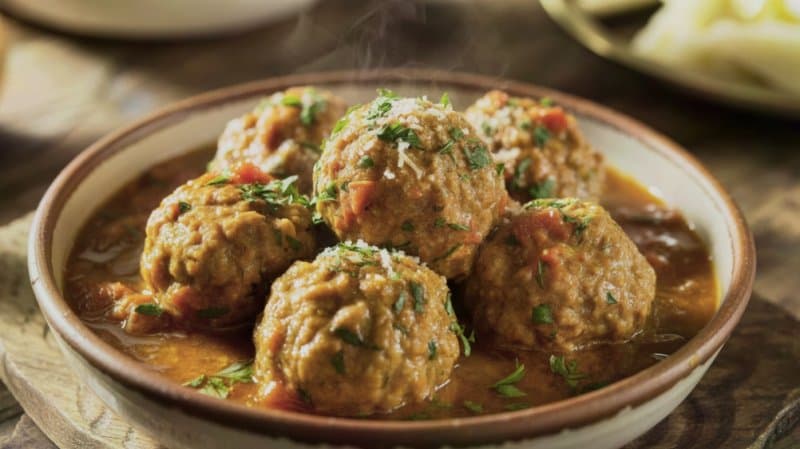
It's one of those easy dinners that warms you up and feels filling, perfect for when you want something with real flavor. Spanish meatballs, or albondigas, are seasoned with garlic, paprika, and herbs, then simmered in a hearty tomato sauce. No fancy ingredients needed—just grab what’s in your pantry and give the sauce some time to bubble away.
They’re great as leftovers too—and you can serve them for lunch or even as tapas for guests. In this blog, we’ll walk you through a simple Spanish meatball recipe: the ingredients, steps, serving ideas, and a few tips to make sure yours come out just right.
This Spanish meatballs recipe keeps the seasoning simple, with a sauce that tastes even better after resting.
A Spanish albondigas recipe can vary between households. Some versions include pork, beef, bread soaked in milk, or a sauce made with stock. This version uses accessible ingredients while keeping the familiar Spanish-inspired flavor.
Prep time: 20 minutes
Cook time: 30 minutes
Servings: 4
Yield: About 20 meatballs
Spanish meatballs with garlic and herbs depend on balance, not heavy seasoning. Garlic gives them a savory base, parsley brings freshness, while smoked paprika adds warmth. Cumin is optional in some interpretations but works nicely here.
For softer homemade Spanish meatballs, avoid packing the mixture too tightly. That small detail matters.
Step 1. Start by mixing up the meatball ingredients. Toss ground beef, breadcrumbs, an egg, half the minced garlic, onion, parsley, paprika, cumin, salt, and black pepper into a bowl. Gently stir it all together—just until the mixture looks even. Don’t go crazy with the mixing, or the meatballs will end up tough.
Step 2. Shape the meatballs next. Roll the mixture into about 20 small balls, roughly an inch wide or so. Try to keep them the same size; they’ll cook better that way. If things get sticky, wet your hands a little.
Step 3. Now, brown the meatballs. Heat some olive oil in a large skillet over medium heat. Cook the meatballs in batches, so you don’t crowd the pan. Turn them gently for 5–7 minutes until they’re nicely browned on all sides, but don’t worry about cooking them through just yet. Move them to a plate when they’re done.
Step 4. Time for the sauce. In that same skillet, toss in the rest of the garlic and cook for 30 seconds. Pour in crushed tomatoes, broth, oregano, a bay leaf, and a pinch of red pepper flakes if you want some heat. Scrape up anything stuck to the bottom of the pan—it adds flavor.
Step 5. Slide the meatballs back into the skillet. Cover the pan most of the way and simmer everything for 15–20 minutes. The meatballs should be cooked through—look for 160°F inside. Fish out the bay leaf when you’re done.
Step 6. Give the sauce a taste and add salt or pepper if you need to. Let the whole thing sit for about five minutes, then spoon on more sauce before serving. Make sure they’re hot when you set them on the table.
Don't Miss: Master the Best Family-Friendly Tacos Recipe for Dinner
The sauce should coat the meatballs, not drown them in watery liquid. A gentle simmer helps everything come together.
For Spanish meatballs in tomato sauce, choose crushed tomatoes for a thicker texture. If the sauce becomes too thick, add a splash of broth. If it's thin, simmer uncovered for a few minutes after the meatballs are cooked.
What ingredients are used in traditional Spanish albondigas? Ground meat, garlic, breadcrumbs or bread, egg, and seasonings are common. Recipes vary by region and family. Some sauces also use onion, wine, stock, or almonds.
Three things make a noticeable difference.
This is the practical difference between juicy homemade Spanish meatballs and firm, compact ones.
An authentic Spanish meatballs preparation isn't one fixed formula. Smaller albondigas are often served as tapas, while larger portions work for dinner.
Spanish tapas meatballs are usually smaller and easy to pick up with cocktail picks or serve in a shallow dish. Shape the meatballs around 3/4 inch wide and check them earlier, since smaller pieces cook faster.
For a tapas party, serve them with olives, crusty bread, roasted peppers, and a simple salad. Keep the sauce warm in a small serving dish.
Tomato-based sauces are a familiar option, though Spanish meatballs also appear with other sauces depending on the recipe. Some versions include onion, wine, stock, or nuts. This tomato sauce is a convenient home-cooking choice, not the only traditional method.
Suggested Reading: Try This Authentic Sangria Recipe for a Party Favorite Today
Both dishes are comforting, but their seasoning and presentation can differ. There is overlap, of course.
| Feature | Spanish Albondigas | Italian-Style Meatballs |
|---|---|---|
| Seasoning | Garlic, paprika, parsley | Garlic, oregano, basil |
| Sauce | Tomato, stock or regional variations | Often tomato-based |
| Serving | Tapas or main course | Often served with pasta |
| Shape | Frequently smaller | Varies, often larger |
What is the difference between Spanish albondigas and Italian meatballs? Spanish albondigas are often served as tapas or in a sauce, while Italian-American meatballs commonly accompany pasta. Neither has one universal recipe.
Yes. Arrange them on a lightly oiled baking sheet and bake at 400°F for around 15–20 minutes, checking for an internal temperature of 160°F for beef. Then finish them in the sauce for 5–10 minutes.
Baking reduces stovetop splatter. Browning in a skillet, however, gives a deeper crust.
This easy Spanish meatballs recipe can stretch into another meal, which makes it useful for busy evenings.
Try one of these combinations.
Also Read: Enjoy Crispy Homemade Churros with Rich Chocolate Sauce Now!
Good Spanish meatballs don’t require a giant shopping list or tricky techniques. The magic happens in the details: gently mixing the meat, browning them patiently, and letting the sauce cook slowly. That’s how you get soft, flavorful meatballs every time.
Pile them on rice, set them out with bread, or make a batch for tapas. Leftovers make a solid lunch, so you won’t waste a bite. Try the recipe as is once, then tweak the herbs and spices or adjust the sauce if you want. That’s the beauty of home cooking—it becomes your own.
Sure, you don’t need eggs. Try using a bit of bread soaked in milk or another egg-free binder. The texture changes a little—just go easy on how much you add, so the mixture doesn’t get too sticky or dense. Mix it just enough to hold together.
Definitely. Just cover the uncooked mixture and stash it in the fridge for up to 24 hours. Shape and cook the meatballs whenever you’re ready. Make sure it’s in an airtight container and gets refrigerated right away to keep things fresh.
Absolutely. Plain frozen meatballs make things faster. Cook them as the package says, then let them simmer in your sauce until they’re hot all the way through—important for bigger meatballs.
Easy fix: skip the red pepper flakes and use a mild paprika. Smoked paprika works too—it gives great flavor without really adding heat. You can also leave the sauce as-is and let everyone spice up their own serving if they want.
Yes, just let them cool first. Freeze the meatballs and sauce together in an airtight container. They keep best if you use them within three months. Thaw them overnight in the fridge if you can, then reheat until they’re piping hot.
This content was created by AI