

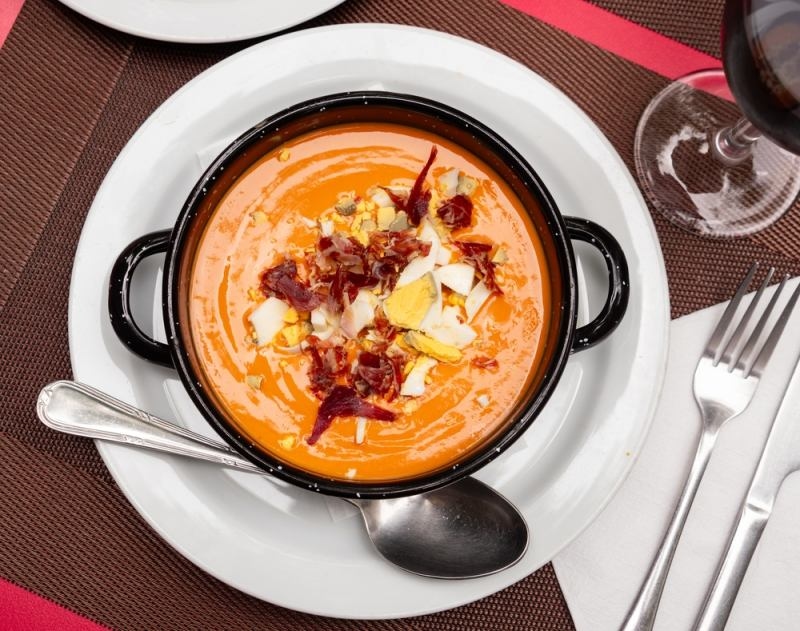
There's a reason every table in Córdoba seems to have a bowl of salmorejo on it come July. This salmorejo recipe captures that same magic, using ripe tomatoes, day-old bread, and olive oil good enough to taste on its own. No stove, no fuss, twenty minutes tops. Whether you're beating the heat or trying to impress dinner guests with something a little different, this one rarely disappoints.
So, what is salmorejo Spanish soup, exactly? Think of it as tomato soup's richer, more stubborn cousin. It's cold, thick, and made from blending tomatoes, bread, garlic, and olive oil until smooth. People in Córdoba often eat it with a piece of bread instead of a spoon, which tells you everything about the texture.
Curious what ingredients are used in salmorejo? The list is short, but don't let that fool you — every item pulls real weight here. Skimp on the tomatoes or use bargain-bin olive oil, and the whole thing falls flat. Fresh, ripe produce genuinely makes or breaks this dish.
| Ingredient | Quantity | Purpose |
| Ripe tomatoes | 1 kg | Base flavour and colour |
| Stale white bread | 200 g | Thickens the soup |
| Garlic | 1 clove | Adds a sharp, savory kick |
| Extra virgin olive oil | 100 ml | Creaminess and richness |
| Salt | To taste | Balances sweetness |
| Sherry vinegar | 1 tbsp (optional) | Adds brightness |
Top it with chopped hard-boiled egg, diced jamón serrano, and one more drizzle of oil for good measure.
Top Pick: Caldo De Pollo Recipe: A Classic Spanish Comfort Soup
Everyone asks at some point: what is the difference between salmorejo and gazpacho? Fair question, since both are cold and both start with tomatoes. But salmorejo skips the water and doubles down on bread, which is why you can practically stand a spoon up in it. Gazpacho, meanwhile, adds cucumber and pepper and stays thin enough to sip from a glass.
| Feature | Salmorejo | Gazpacho |
| Texture | Thick, dip-like | Thin, pourable |
| Bread | Large amount | Small amount or none |
| Extra vegetables | None | Cucumber, pepper |
| Served with | Spoon or bread | Spoon or glass |
| Origin | Córdoba | Andalusia region-wide |
This authentic salmorejo recipe from Córdoba sticks to the ratio families there have used for years. Get the bread-to-oil balance right, and the soup turns out silky instead of gluey or thin. Once that base clicks, you can nudge the thickness up or down to suit your own taste.
Wondering how to make an authentic salmorejo recipe the way it's done in Córdoba? Start by scoring and briefly blanching the tomatoes. It makes peeling almost effortless and keeps the final texture smooth. Seeds are optional — plenty of cooks there leave them in for a fuller, rounder flavour.
The real secret behind how to make traditional Spanish salmorejo is patience, plain and simple. Rush the oil, and the mixture splits instead of turning creamy. Pour it in slowly, almost like you're making mayonnaise, so the fat has time to bind properly with the tomato and bread.
Want it silkier still? Push the finished soup through a fine sieve. It catches any stray skin or seed that survived the blender. Most home cooks skip this step without a second thought, but restaurants almost never serve salmorejo without straining it first.
If you're after tips on how to make Spanish cold tomato soup that holds up for days, storage matters more than people think. Keep it in an airtight container and press plastic wrap right onto the surface. That one move stops a skin from forming and keeps the colour looking fresh for up to three days.
One more thing: start with tomatoes at room temperature, then chill the finished soup for at least two hours. Serve it too early, and the flavours haven't had a chance to settle — the texture will feel thinner than it should.
Getting that spoon-coating texture isn't hard once you understand how to make creamy salmorejo at home consistently. It really comes down to the bread-to-oil ratio more than anything else. Feeling fancy? Stir in a spoonful of Greek yoghurt or a raw egg yolk right before serving for extra richness.
Also Read: Flavorful Spanish Chicken and Rice Recipe for Family Dinners
Not sure how to serve traditional salmorejo the way locals do? Spoon it into shallow bowls, then pile on diced hard-boiled egg and jamón serrano without holding back. A final swirl of olive oil and a scatter of croutons finish it off and add a bit of crunch against all that creaminess.
It also makes a great dip for grilled bread, or you can spoon it over toasted baguette slices as a quick tapa. Some restaurants even pour it into small glasses and serve it as a starter shot before the main course lands.
At the end of the day, this salmorejo recipe proves that a handful of humble ingredients can turn into something genuinely special. Ripe tomatoes, good bread, and decent olive oil are really all it takes to bring a slice of Córdoba into your own kitchen. Once you've made it a couple of times, you'll start tweaking the ratios to match exactly how you like it — thicker, garlickier, whatever works. Give it a chill, pile on the toppings, and you've got a dish that feels far fancier than the effort it actually took.
Yes, salmorejo actually tastes better after a night in the fridge, since the flavours have time to settle and deepen. Just give it a stir before serving it cold.
Stale, dense white bread like pan de telera is the way to go. Soft sandwich bread turns watery instead of giving you that thick, spoonable texture you're after.
Traditionally, yes — it's a cold dish, especially popular during Andalusia's brutal summer heat. Some chefs play around with warm versions, but the classic Córdoba recipe stays chilled.
Bread is what gives salmorejo its signature body, so cutting it out changes the dish completely. If you want something lighter, just ease off the bread a little instead.
Kept airtight, it'll stay good for up to three days. Press plastic wrap directly onto the surface to stop discolouration and keep that skin from forming on top.
This content was created by AI