

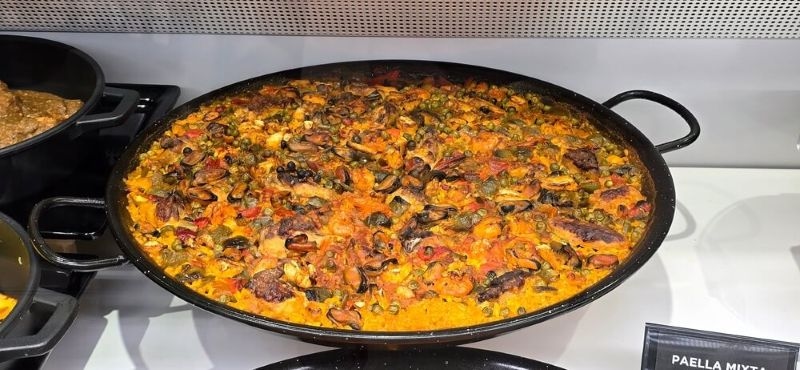
Exploring local cuisine while traveling often leads directly to a culture's communal kitchen. In Spain, that cultural heart beats inside a massive, steaming pan of rice. A true paella mixta recipe bridges the gap between rustic inland farms and the vibrant Mediterranean coast. Mastering this ultimate Spanish staple is non-negotiable for anyone serious about experiencing global food. Here is how to bring that authentic coastal energy directly to your dinner table.
Must Read: History of Paella and Its Journey Through Spanish Culture
Understanding a dish requires looking at why it has survived for centuries. This dish is not just a meal; it is a full sensory experience. Here is why this massive, one-pan wonder dominates Spanish menus.
It doesn’t make you choose between surf and turf. You’re throwing hearty farm proteins like chicken or rabbit right next to fresh coastal prawns and mussels. The result is a massive, complex flavor that hits every single note and keeps everyone at the table happy.
If you want to know if whoever cooked this actually knows what they're doing, check the bottom of the pan for the socarrat. That caramelized, toasted layer of rice is the holy grail of the dish. It gives you this insanely crispy, savory crunch right against the tender seafood.
Don't even think about plating this up in the kitchen. You drop the whole massive pan right in the middle of the table and let everyone dig in. It forces people to actually talk, share, and eat together.
Before anyone even takes a bite, the aesthetics do all the heavy lifting. The rich golden color from the saffron, mixed with the deep shadows of the mussel shells and the bright red peppers, creates a highly realistic, high-fidelity look that turns a regular dinner into an absolute centerpiece.
Top Pick: Easy Paella Recipe for Flavorful Spanish Rice at Home
Figuring out how to explore local cuisine while traveling usually starts with understanding the street-level food, but you can bring that exact same energy to your kitchen. You just have to build it step-by-step, layering the flavors until the whole thing locks together perfectly.
Get your pan hot with some good olive oil over medium-high heat. Toss in your salted, bite-sized chicken thighs and let them sit until they get a serious golden-brown crust. Once they're looking good, shove them to the outside edges of the pan so you have room to work in the middle.
Drop your diced onions and red peppers right into that empty center spot. Cook them down until they're soft, then throw in your minced garlic and grated tomatoes. Let it all reduce until the water cooks out and you're left with a thick, heavy paste. That right there is the entire flavor foundation for the dish.
Pour your dry rice directly into the center of the sofrito. Stir it constantly for about two minutes. You want every single grain to be fully coated in the infused oil and slightly toasted. This prevents the rice from turning mushy later in the cooking process.
Pour in your hot chicken or seafood broth (already infused with your steeped saffron threads) and a generous pinch of smoked Spanish paprika. Stir everything once to distribute the meat, rice, and vegetables evenly across the entire pan. From this exact moment forward, do not touch the rice. Stirring activates the starch and will turn your dish into risotto.
Let the pan simmer vigorously for about ten minutes until the rice begins to swell and peek through the liquid. Gently press your raw prawns, cleaned squid rings, and scrubbed mussels (hinge-side down) into the rice.
Turn the heat down to low. Listen closely to the pan. When the liquid is entirely absorbed, the sound will change from a wet simmer to a dry crackle. Let it sizzle for an extra 60 to 90 seconds to toast the bottom layer, but watch carefully so it does not burn.
Remove the pan completely from the heat. Drape a clean kitchen towel or a piece of foil over the top and let it rest undisturbed for exactly five minutes. This allows the starches to settle, the proteins to relax, and the final bits of moisture to be absorbed.
You cannot fake the flavor profile with cheap substitutes. A genuine experience requires genuine components. Here is exactly what you need to secure.
Never use standard long-grain or basmati rice. You need a short-grain Spanish rice that can absorb three times its volume in liquid without bursting or turning into a sticky paste.
This is non-negotiable. Real saffron threads provide the signature golden color and the distinct, slightly earthy floral aroma. Turmeric is a color substitute, but it completely changes the flavor.
Boneless, skinless chicken thighs (never breasts, which dry out), fresh King prawns with the shells still on for extra flavor, cleaned squid, and fresh, tightly closed mussels.
Ripe, sweet tomatoes (grated to remove the skin), Spanish onions, fresh garlic cloves, and a large red bell pepper.
A high-quality, low-sodium chicken stock or a robust seafood broth. The rice will absorb whatever you give it, so the broth must be highly flavorful.
Nailing this dish is a massive win. If you track down the right Bomba rice, spring for real saffron, and actually respect the process, mastering the paella mixta recipe is totally doable. Whether you're feeding a weekend crowd or breaking down how to explore local cuisine while traveling step-by-step for your readers, knowing how to make a classic paella mixta completely changes the game in your kitchen.
You can, but you have to improvise. If a carbon steel pan isn't an option, just grab the absolute widest, shallowest skillet you own (at least 12 inches). Stay away from deep Dutch ovens—the rice will stack up way too thick, and you'll completely ruin your chances of getting a proper crust.
You probably made one of two classic mistakes: you couldn't resist stirring it after the broth went in, or you used the wrong rice. Standard long-grain just falls apart during a long simmer, and stirring it forces all the starch out, turning the whole thing into a gluey mess.
You have to trust your ears and your nose. When the liquid finally cooks off, that wet bubbling sound shifts into a sharp, dry crackle. You'll also catch a heavy, toasted smell. If it shifts from "toasted" to an acrid, burning smoke, rip that pan off the burner immediately.
This content was created by AI