

Starting a morning with a Spanish Breakfast is a delightful way to experience the local lifestyle. A Traditional Breakfast in Spain is usually a light meal that helps people get through the early hours before a much larger lunch. The local Spanish Coffee Culture is a major part of this daily ritual, as the smell of fresh beans fills the air in every neighborhood café. Whether sitting at a bar or a small table, the Morning Food Spain residents enjoy is always fresh and full of flavor.
Most people in the Mediterranean region prefer something simple to eat when they first wake up. A Traditional Breakfast in Spain often consists of a piece of toasted bread with various toppings. Unlike in many other countries, eggs and heavy meats are not the most common choice for the very first meal of the day.
These simple ingredients highlight the quality of local produce. Fresh tomatoes are rubbed onto crunchy bread, followed by a generous drizzle of golden olive oil to create a satisfying and healthy snack.
Worth a Look: Regional Spanish Cuisine: How Food Changes Across Spain
The heart of every morning routine lies within the deep roots of Spanish Coffee Culture. People do not just drink coffee for the caffeine; they drink it to socialize and connect with their neighbors. Small ceramic cups and the sound of clinking spoons are common sights in every street corner establishment.
Most locals order a café con leche, which is half strong coffee and half steamed milk. This beverage is often enjoyed slowly while reading the newspaper or chatting with the waiter about the previous night’s football match.
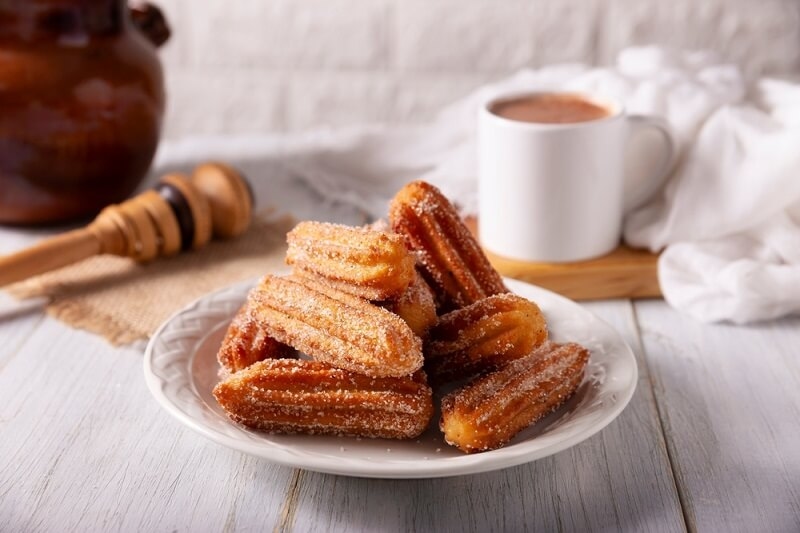
On weekends or special holidays, many families head out to find Churros con Chocolate. This is a much heavier and sweeter option compared to the usual daily toast. These fried dough pastries are famous around the world for their unique shape and crunchy texture.
Eating Churros con Chocolate is an experience that involves dipping the hot pastry into a cup of chocolate so thick it resembles pudding. It is a favorite for children and adults alike during the colder winter months.
While sweets are popular, there are many savory choices for Morning Food Spain offers to those with a big appetite. A small portion of a potato omelet is a common sight on the counters of breakfast bars. This dish is filling and provides the energy needed for a long day of work or sightseeing.
These items are usually served at room temperature. They show that Spanish Breakfast can be quite varied depending on which part of the country a person is visiting.
The food changes quite a bit as a traveler moves from the rainy north to the sunny south. Each area has its own special bread or local pastry that they take great pride in serving every morning. This diversity makes the culinary landscape very interesting for visitors.
Southern regions might use lard spread on toast, while the islands are famous for their sweet, coiled pastries. These traditions have stayed the same for many decades, preserving the history of each town.
Morning time is a very social hour in the local community. People do not usually take their coffee to go in a paper cup. Instead, they stand at the bar or sit on a terrace to enjoy the fresh air and the company of others.
This slow pace of life is a key part of why the food tastes so good. Taking ten minutes to sit and enjoy a meal changes the way a person feels for the rest of the day.
Thought You’d Find This Useful: Taste Famous Spanish Food Festivals with the Tradition Now!
Many parts of the traditional menu are actually very good for the body. Using olive oil instead of butter provides healthy fats that are better for the heart. Fresh fruit juices, especially orange juice, are also a staple on every breakfast table.
Because the portions are smaller, people do not feel sluggish after eating. It is just enough food to stay focused until the mid-morning snack time arrives.
Because the first meal is light, many people have a second small meal around eleven o'clock. This is often called the almuerzo or simply a second coffee break. It helps bridge the long gap between the early morning and the late afternoon lunch.
This schedule allows for a very balanced day of eating. It prevents overeating during one single meal and keeps the metabolism moving steadily.
Walking into a busy café can be intimidating, but knowing a few words makes it much easier. Most places expect customers to be direct and quick with their orders. Knowing the difference between the various types of milk and bread is the first step.
Learning these small details shows respect for the local culture. It often results in better service and a more authentic experience at the breakfast bar.
One does not have to be in Madrid to enjoy these flavors. Most of the ingredients are easy to find at a local grocery store. All it takes is some high-quality oil, ripe tomatoes, and a loaf of crusty bread.
Adding a side of serrano ham or a small bowl of olives completes the plate. It is a simple way to bring a taste of the Mediterranean into a kitchen anywhere in the world.
Learn More Here: Mediterranean Diet Spain, Benefits of Spanish Healthy Eating
A Spanish Breakfast is more than just a meal; it is a way to enjoy life. By trying a Traditional Breakfast in Spain and experiencing the Spanish Coffee Culture, you connect with history. Whether eating toast or Churros con Chocolate, the flavors are amazing. Start your morning with these recipes today.
The most common choice is pan con tomate, which is toasted bread rubbed with fresh tomato and topped with olive oil and salt.
While available daily, it is most popular as a treat on Sunday mornings or during local festivals and New Year celebrations.
It serves as the main social hub for the community where people meet to discuss news and connect before starting their workday.
Children often enjoy galletas, which are simple biscuits, or a small cup of chocolate with a piece of sweet bread.
This content was created by AI